Walking on Water: 5 Surprising Ways to Experience Seoul’s Most Iconic Bridge in 2026
Seoul is shaking off its winter slumber early this year, and nowhere is the transformation more evocative than at the Han River. For decades, the Jamsugyo Bridge has served as the industrial underbelly of the double-decker Banpo Bridge—a high-traffic asphalt artery designed for the cold efficiency of commuting. However, the 2026 Jamsugyo Tteubeok Tteubeok Festival represents a total reclamation of urban space.
Named after the rhythmic Korean onomatopoeia for the sound of “walking,” the festival silences the engine roar and replaces it with a 1.2-kilometer pedestrian sanctuary. This isn’t just a bridge closure; it’s an invitation to experience the river’s vastness without a windshield in the way.
1. The Early Bloom of the Moonlight Rainbow Fountain
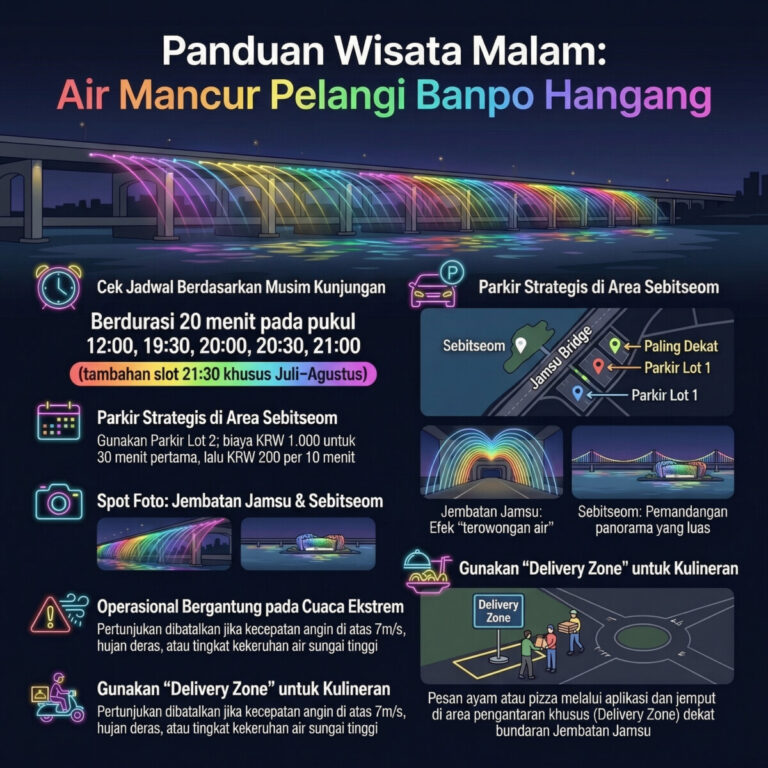
In a sophisticated pivot from tradition, Seoul has expanded its “night view” season. While the Moonlight Rainbow Fountain—the world’s longest bridge fountain at 1,140 meters—typically debuts in April, the 2026 show officially begins its season on March 16th.
This engineering marvel pumps 60 tons of water per minute directly from the Han River through 380 nozzles. In 2026, the experience is heightened by a curated soundtrack that bridges the gap between high culture and K-pop. As you walk, you’ll hear the fountain “dance” to a diverse 100-song playlist featuring NewJeans’ “Attention,” AESPA’s “Next Level,” and the cinematic swells of Hans Zimmer’s “First Step.”
“Illuminated by 200 LED lights, the streams are dyed in a vibrant seven-color spectrum, turning the bridge into a living aurora that harmonizes with the skyline.”
2026 Performance Schedule (20 minutes per session):
- Off-Peak (March–June, Sept–Oct): 12:00, 19:30, 20:00, 20:30, 21:00.
- Peak Summer (July–August): An additional session is added at 21:30.
2. A Living Room on the Water: Reading & Recreation
The most striking element of the festival is the “Reading Jamsugyo” phenomenon. Imagine an open-air library featuring over 1,000 curated titles and an ocean of bean bags placed directly on the asphalt. It is a romantic, quiet juxtaposition: the stillness of a book against the backdrop of a flowing river.
For those with a more active spirit, the Jamsugyo Playground offers a nostalgic dive into Korean culture. You can join locals in a game of jegichagi (traditional hacky sack), try your hand at craft-making, or browse the Flea Market (15:00–20:00). The market focuses on high-end upcycled goods, handmade accessories, and eco-friendly treasures, making it a perfect stop for the conscious collector.
3. The Water Tunnel: The Ultimate iPhone Hack
When vehicle traffic stops, the Jamsugyo level becomes a “water tunnel.” Because this deck sits directly below the fountain nozzles, you can walk through a cascading veil of river spray. It is the bridge’s most intimate perspective, offering a visceral sense of the fountain’s power.
Senior Editor’s Pro-Tips:
- The Best Angle: For the most dramatic “rainbow” saturation, head to the 수상택시 승강장 (Water Taxi Platform) area. This vantage point allows you to frame the entire 1,140m span.
- The Aurora Effect: Capture the water like a misty aurora by using your iPhone’s Live Photo mode. Take the shot, open it in your Photos app, and select “Long Exposure” from the effects menu to smooth the falling water into a silky, ethereal glow.
- The Golden Hour: Aim for the 20:00 or 20:30 sessions. The deeper twilight allows the 200 LED lights to pop against the darkening sky.
4. The Private Salon: Why the Tubester is 2026’s Ultimate Flex
If the crowds on the bridge feel too public, the Tubester offers the ultimate private leisure experience. Located at Gavit Island (가빛섬) within the Sevit Seom complex, these circular, electric-powered motorboats are essentially private floating salons for 6 to 8 people.
This is the “Café on the Water” experience that has come to define Seoul’s post-pandemic leisure culture. There is no better way to watch the fountain show than from the water’s surface.
- The Cost: Expect to pay between 60,000 and 100,000 KRW per session.
- The Picnic Hack: While you can bring your own pizza or coffee, the savvy move is to order “Han River Ramen” from the nearby GS25 convenience store just before boarding. The electric motor is easy to navigate (no license required), allowing you to dine while drifting.
5. The Tteubeok Cheat Sheet: Logistics for the Modern Explorer
Navigating a major metropolitan festival requires technical precision. To avoid the frustration of gridlock and regulations, follow this essential guide:
- Timing is Everything: The bridge is pedestrian-only on Sundays only (12:00–21:00). Vehicle restrictions are in place from 10:00 to 23:00.
- Ditch the Car: Parking at Banpo (Lots 1, 2, and 3) is notoriously difficult. Instead, take the subway to Express Bus Terminal Station (Exits 8-1 or 8-2). Alternatively, buses 740, 405, 401, and 406 stop directly at the Banpo Bridge Southern End.
- The “No Wheels” Rule: While the park is a haven for cyclists, you cannot ride bicycles or electric kickboards (e-scooters) on the bridge during the festival. You must dismount and walk your “wheels” across.
- Mastering the Shade: The 2026 regulations allow for shade canopies from March to November (09:00–19:00). However, to avoid a fine, ensure your tent is a 원터치 (pop-up) style, no larger than 2m x 2m, and that at least two sides remain open at all times.
Beyond the Bridge
As Seoul moves toward a more pedestrian-centric future, the Jamsugyo Festival serves as a blueprint for how we might reclaim our cities. It asks a compelling question: As our metropolises grow denser and louder, is the simple act of a quiet, vehicle-free walk our new ultimate luxury?
Whether you come for the NewJeans soundtrack, the rare vintage finds at the flea market, or the simple joy of reading on a bean bag in the middle of a bridge, Jamsugyo in 2026 is a destination that proves the best way to see a city is at the speed of a stroll.