Discovering Mullae-dong: Seoul’s Industrial Soul in Transition
1. Introduction: Where Gritty History Meets Transitional Twilight
Stepping into Mullae-dong is like walking through a portal into an ephemeral Seoul, where the orange sparks of a blacksmith’s torch fly against the minimalist concrete of a hidden art gallery. This neighborhood, whose name is derived from the “Mulle” (spinning wheel) of its 1960s textile past, eventually evolved into a fortress of ironworks. Today, it exists in a state of neo-nostalgia—a “Creative Village” where 2025’s trendiest cafes inhabit the rusted shells of the industrial age.
However, this industrial chic atmosphere is in its transitionary twilight. In late 2025, a Samsung-Daewoo consortium was selected for a massive 934-billion-won redevelopment project in Mullae-dong 4-ga. As high-rise 공동주택 (apartments) prepare to replace the low-slung steel workshops, there is an urgent “visit-before-it’s-gone” energy defining the district.
Mullae-dong At a Glance:
- Raw Steel Aesthetics: Active ironmongers and blacksmiths providing a sensory backdrop of metallic shearing and industrial grit.
- Neon Murals: Vibrant street art hidden within the labyrinthine alleys of Mullae-dong 3-ga.
- “No-po” Neo-Nostalgia: Legendary eateries that have served ironworkers for half a century.
- Transitional Spirit: A neighborhood caught between its blue-collar heritage and a 49-story future.
2. Getting There: Seamless Logistics
Mullae-dong offers a sharp contrast to the high-octane “Mega-Mall” culture of the nearby Time Square and Yeongdeungpo Station hubs.
How to Get There:
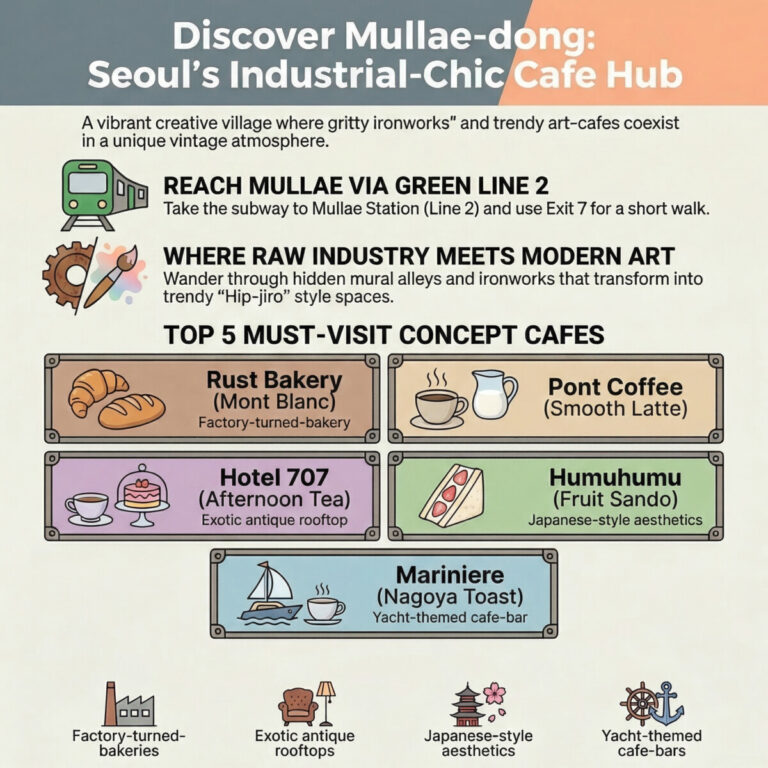
- Subway: Take Seoul Subway Line 2 to Mullae Station.
- Access: Use Exit 7 to walk directly into the heart of the Creative Village (Mullae-dong 3-ga) or Exit 1 for the redevelopment zones in 4-ga.
- The Triangle: It is perfectly situated within the Yeongdeungpo-gu “triangulated hub,” making it easy to combine a morning of industrial exploration with an afternoon of luxury shopping at Time Square.
3. Why You Must Visit Mullae Creative Village
The appeal of Mullae (specifically 2-ga to 4-ga) lies in its startling juxtapositions. It is one of the few places in Seoul where the city’s industrial soul hasn’t been polished away yet.
- The Iron and Art Contrast: You’ll find high-end boutiques and art galleries operating mere inches away from working steel presses. The visual friction of rusted metal against curated art is a photographer’s dream.
- The Alleys of Mullae-dong 3-ga: This is the creative epicenter, filled with murals and sculptures that utilize industrial scraps, turning the “gritty” into the “sublime.”
- Authentic “Yajang” Culture: During the temperate evenings of spring and autumn, the “Yajang” (outdoor seating) culture thrives. Drinking soju on a plastic table in a narrow alleyway surrounded by the scent of iron is the ultimate “old meets new” experience.
4. The “No-po” Legend: Traditional Food for the Soul
These “No-po” (old, legendary) restaurants are the backbone of the neighborhood, offering “soul food” at prices that feel like a miracle in modern Seoul.
- Youngil Bunsik
- The Dish: Kal-bibim-guksu (spicy cold knife-cut noodles, 7,000 won) and oversized dumplings.
- Insider Tip: With over 50 years of history, this spot is a local icon. Avoid the peak lunch hour (12:00–1:30 PM) as it remains a favorite for the neighborhood’s ironworkers.
- Daechunamu Kalguksu
- The Dish: Traditional Kalguksu (6,000 won) featuring a broth made from pollack heads and anchovies, topped with spicy cheongnyang chili peppers.
- Insider Tip: Known as the “Miracle of 6,000 Won” because it includes rice, this 40-year establishment is strictly cash-only.
- Sunchang Sikdang
- The Dish: Octopus Stir-fry (Nakji-bokkeum, 10,000 won) and Baekban (traditional meal).
- Insider Tip: The owner, originally from Sunchang, has been here for 30 years. Look for the “meal ledger” (식사 대장) hanging by the counter—it’s the authentic record of the ironworkers who eat here daily.
- Card Bunsik
- The Dish: Savory Jangtteok (pancake) and spicy hand-torn Sujebi.
- Insider Tip: A true “Drunkard’s Heaven,” this spot features walls covered in soju caps and a humorous sign reading “무취불가 취중천국.” It was famously the first in the area to accept credit cards in 1993, hence the name.
- Eunjin Pocha
- The Dish: Butter Scallops and “Biological Specimen” Seafood.
- Insider Tip: Don’t just look at the menu; ask the owner what’s in the “treasure refrigerator.” She often whips up bespoke dishes from fresh daily catches that aren’t listed on the wall.
5. The Modern Perk: Trendy Dessert Cafes
While the “No-po” spots represent the past, these 2025-recommended cafes represent the sophisticated influx of the “Creative Village” lifestyle.
| Cafe Name | Signature Item | Atmosphere / Vibe |
| My Space | Premium Madeleines & Churro-ffles | A TV-featured hotspot known for its “Premium” dessert status and decadent TV-famous Madeleines. |
| Divin Lounge | Cherry Hazelnut & Bonui-bam Einspänners | High-class antique interior. Try the Cherry Hazelnut with handmade cherry cream or the Bonui-bam (handmade marron cream). |
| Rust Bakery | Croissants, Scones, & Kouign Amann | A “hidden gem” located in a massive, beautifully repurposed industrial building with a sprawling layout. |
| Humu Humu | Fruit Sando (Fruit Sandwich) | Japanese-aesthetic “bookstore” vibe. Their Fruit Sando with fresh whipped cream and cute chocolate eyes is a top 2025 Instagram trend. |
6. Final Travel Tips for Foreigners
Pro-Tips for a Respectful Visit:
- Sensory Awareness: Embrace the “Mullae scent”—a mix of ozone and raw iron. Be aware of the loud “clack-hiss” of metal shearing machines while walking; this is a living workplace, not a movie set.
- Gentrification & Respect: With the 934-billion-won redevelopment looming, emotions can be high. Be deeply respectful when photographing active workshops. Always ask permission if a worker is in the frame.
- Carry Cash: While the trendy cafes like Divin Lounge take any card, the soul of Mullae (spots like Daechunamu) still operates on a cash-preferred or cash-only basis.
7. Conclusion
Mullae-dong is a rare corner of Seoul where the city’s industrial heritage isn’t just a memory; it’s a living, breathing, and rapidly disappearing masterpiece of urban culture. Experience the artistic soul and gritty history of this neighborhood now—before the transition to its high-rise future is complete.